Features
Capture clinical data from the source.
Complete EDC, less manual work.
Harbor carries studies from build and UAT through collection, source review, monitoring, signatures, exports, and database lock, reducing the handoffs that slow clinical teams down.
Self-Serve Study Build
Create and update your own study builds in Harbor. Upload a protocol to generate the first draft, then configure eCRFs, visits, edit checks, source templates, and UAT materials without waiting on vendor tickets.
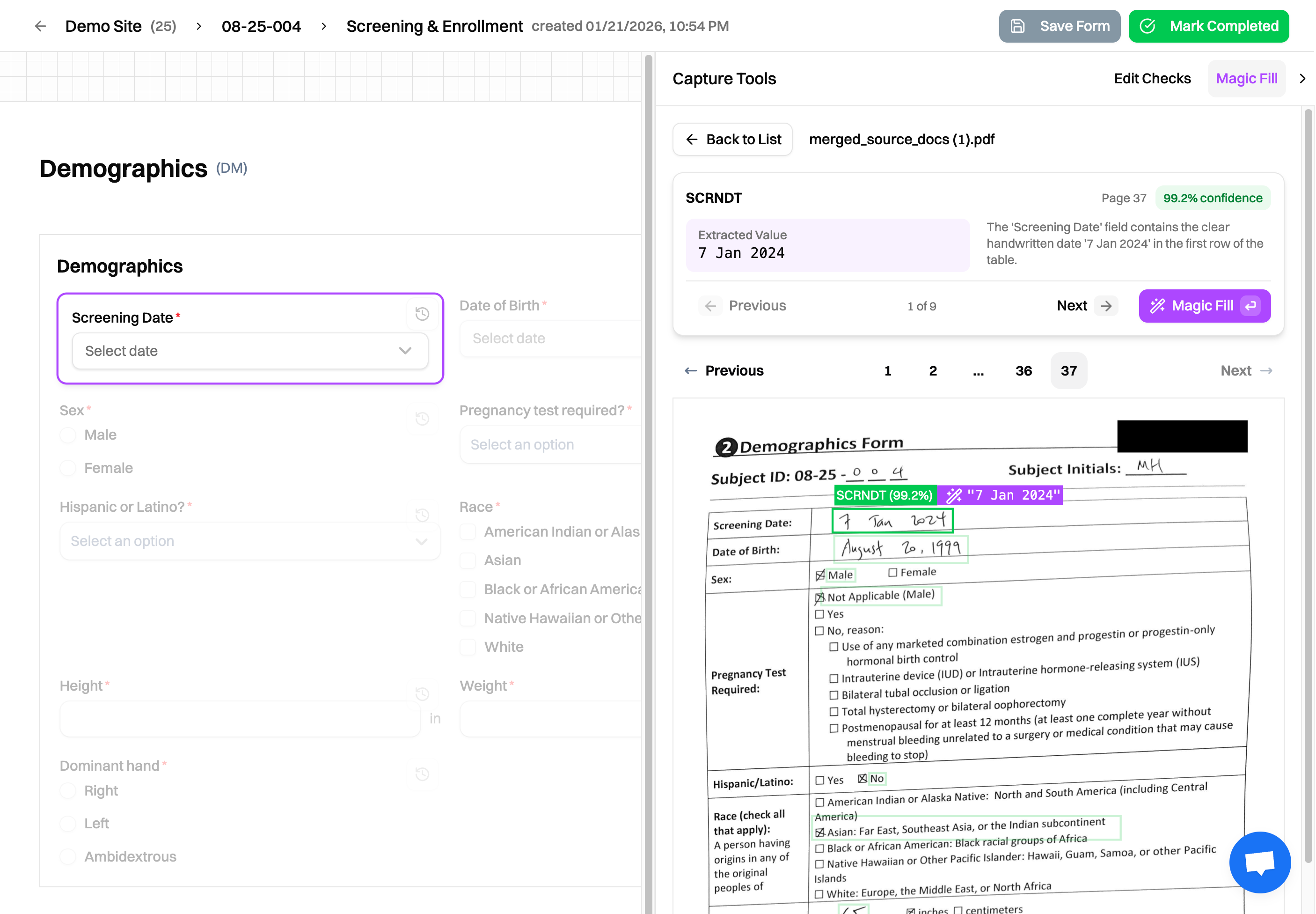
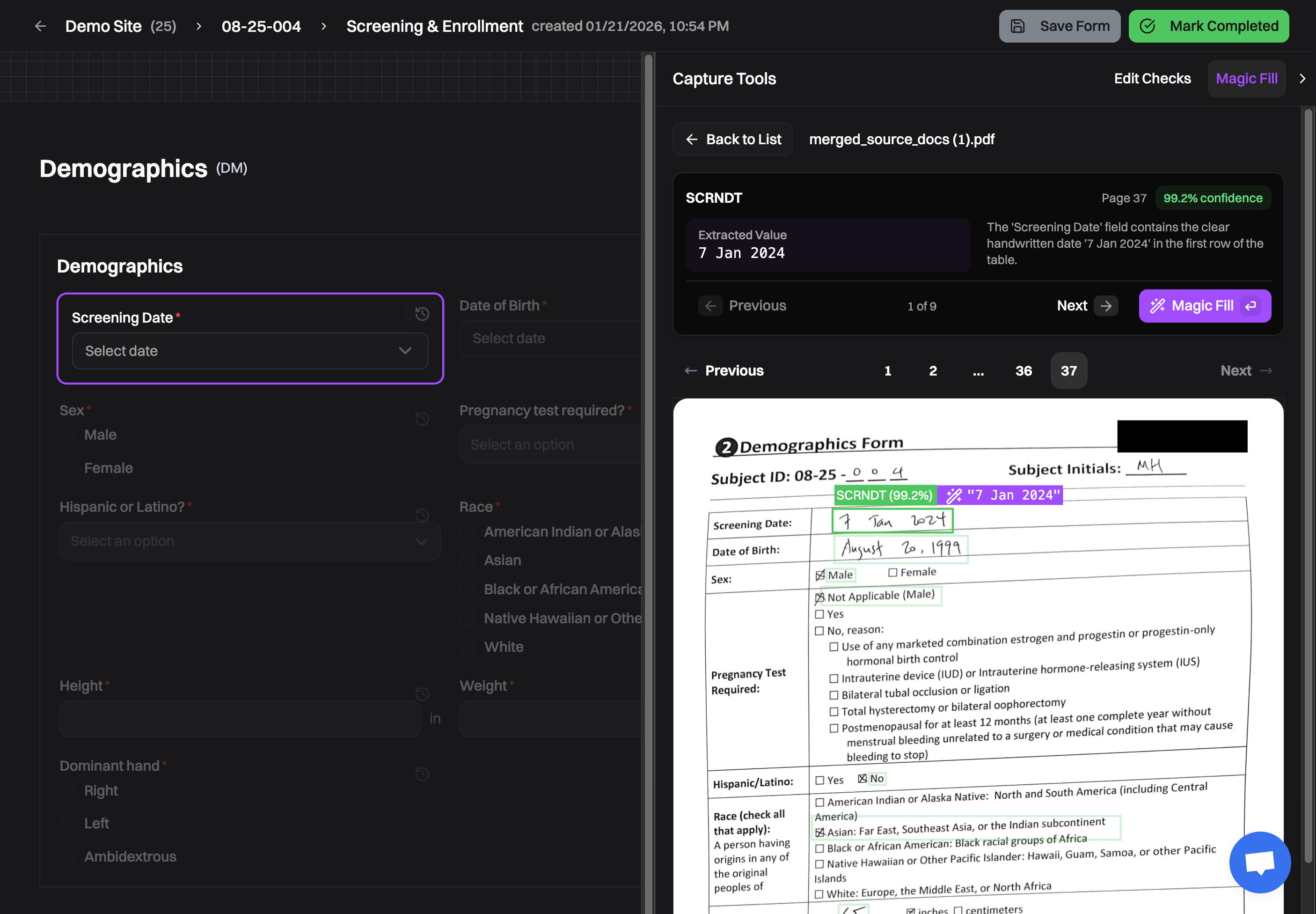
Magic Capture
Upload source documents and turn them into reviewable eCRF entries. Sites type less, sponsors see data sooner, and monitors can trace each value back to source.
ePROs
Collect patient-reported data with scheduled forms, reminders, and magic login links, so patients can submit ePROs without pins, passwords, or account setup.
Randomization
Configure randomization alongside your study build, then assign subjects as they enroll. Harbor keeps treatment assignment, visit data, monitoring, and exports in the same system of record.
Medical Coding
Code adverse events with MedDRA and medications with WHODrug inside Harbor, keeping coded terms connected to eCRF values, source context, queries, audit history, and exports.
Data Monitoring
Review eCRF data alongside source context, open and close queries, track SDV, and inspect audit history in one place.
Signatures and Database Lock
Capture signatures, freeze signed CRFs, and lock the database with the approvals, attestations, and audit history clinical teams need for closeout.
Exports and Reports
Run exports and reports as the study progresses: clinical data, SDV status, query history, audit records, and the operational views teams need to stay current.
The familiar EDC workflow, with fewer manual gaps.
Harbor keeps build, capture, monitoring, and closeout familiar, while reducing the transcription, context-chasing, and reconstruction that usually sit between source documents and eCRF data.
Study Build
Magic Build reads the protocol PDF and drafts eCRFs, visits, events, edit checks, and editable .docx paper source docs. Builders still review, revise, test, and promote versions; they begin with a reviewable first pass instead of recreating the study by hand.
Demographics
Demographics
Subject Data Capture
Sites upload source documents, whether paper (e.g., paper source, lab reports) or electronic (e.g., eSource, EHR), Harbor extracts values into the matching eCRF fields, and users review each value before saving. That reduces transcription for sites while preserving the source context sponsors and monitors need later.
YSI 2300 STAT PLUS
In-Clinic Day
Blood Draw #1
Queries and SDV
Because source documents and eCRF data stay connected, monitors can compare values, open queries, track responses, apply or revoke SDV, and inspect audit history without reconstructing the record from separate systems.
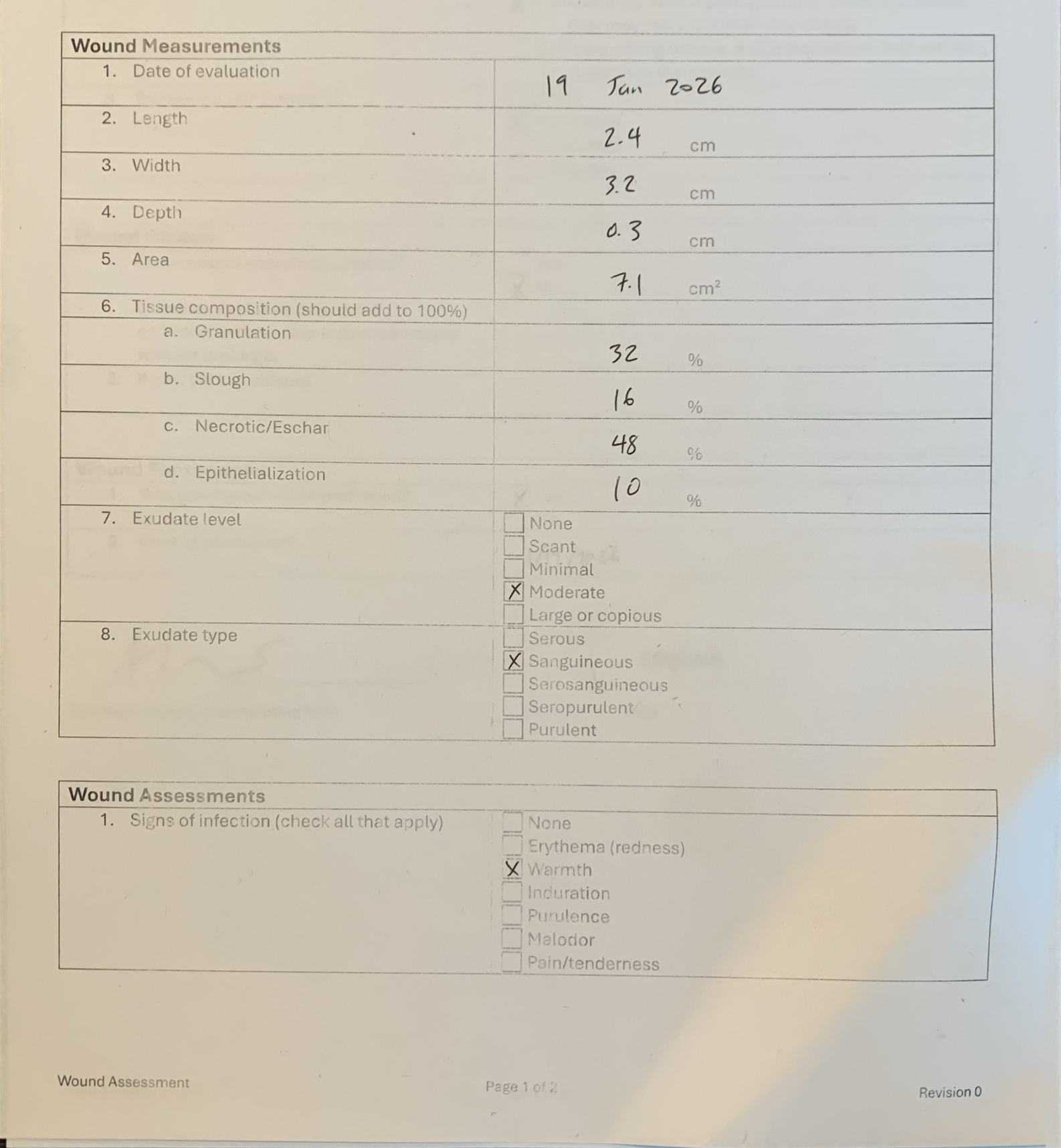
CRA Assistant
Wound depth increased from 0.1 cm at the previous visit to 0.3 cm.
Signatures and Database Lock
Harbor shows completion, signatures, query status, SDV progress, approvals, and lock prerequisites in one study workflow. Teams can see what is ready, what is blocked, and progress towards database lock.
Study Database
Database Lock Review
Database Lock Checks
- All live CRFs signed
- Signed forms locked against edits
- Lock attestation recorded
Lock Signature
- Status
- Locked
- Signature Meaning
- Approval
- Audit Trail
- Updated
One EDC, source to lock.Harbor keeps source documents, eCRF data, queries, SDV, signatures, exports, and audit history connected so teams spend less time stitching the study record back together.
Upload source, review extracted eCRF values, and collect ePROs through magic links without extra accounts or duplicate transcription.
See source-linked eCRF data sooner, with queries, SDV status, exports, and operational reports available as the study progresses.
Review source context, audit history, signatures, validation evidence, and lock readiness without reconstructing the record from separate files.
Want to see your study in Harbor?
Bring a protocol. We'll show how Harbor shortens study build, lightens source data capture, and keeps review, monitoring, and closeout moving in one system, with every AI-assisted step reviewable by your team.